The Committee on Social Communication and Media Sciences
The Committee was established for the first time on 19 January 2021 (Resolution of the Presidium of the Polish Academy of Sciences No. 1/2021) as an expression of recognition of the autonomy of the newly established discipline and the social importance of media research.
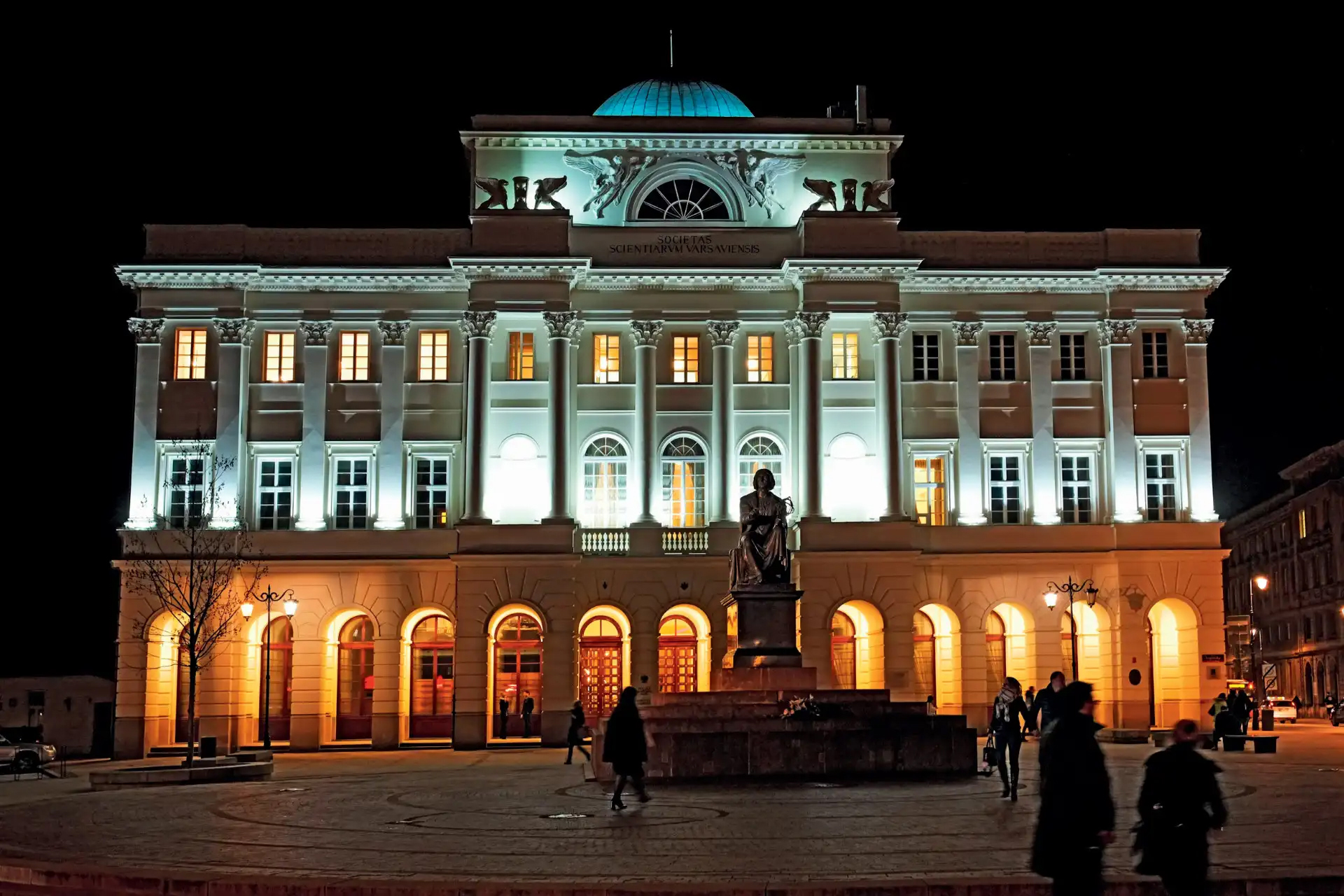
The Committee on Social Communication and Media Sciences of the Polish Academy of Sciences was established on 19 January 2021 by Resolution No. 1/2021 of the Presidium of the Polish Academy of Sciences as a Problem Committee within Division I of the Humanities and Social Sciences. The establishment of the Committee constituted a very important element in the institutional formalization of the discipline of social communication and media studies. At that time, the Committee undertook the preparation of a report on the state of the discipline, an analysis of the value of information, an assessment of changes in the media system in Poland, and the formulation of recommendations concerning the use of digital media in research, scholarly communication, and education.
The activities of the Committee, led by Prof. dr hab. Iwona Hofman, carried out in cooperation with the authorities of the Polish Academy of Sciences and with the support of deans of faculties and directors of institutes from 21 Polish universities conducting research and teaching in media studies, made it possible to organize community elections. As a result, the Committee was transformed from a Problem Committee into a regular Scientific Committee of the Polish Academy of Sciences.
The transformation of the Committee is an important step enabling the further development of the media studies discipline in Poland. Moreover, the establishment of the Committee is of great significance for the media studies community, as it integrates the paradigms of three disciplines: cognitive and social communication sciences, media studies, and book and information studies, which had previously existed separately within the scientific classification system.
Committee Leadership
-
Titular Professor Iwona Hofman
Chair of the Committee
-
Titular Professor Jadwiga Woźniak-Kasperek
Deputy Chair
-
Titular Professor Stanisław Jędrzejewski
Deputy Chair
-
Titular Professor Urszula Doliwa
Member of the Presidium
-
Professor Agnieszka Stępińska
Member of the Presidium
-
Professor Weronika Świerczyńska-Głownia
Member of the Presidium
-
Professor Anita Has-Tokarz
Secretary of the Committee
Members
-
Professor Małgorzata Adamik-Szysiak
Member
-
Titular Professor Janusz Włodzimierz Adamowski
Member
-
Titular Professor Igor Borkowski
Member
-
Titular Professor Robert Cieślak
Member
-
Professor Olga Dąbrowska-Cendrowska
Member
-
Titular Professor Urszula Doliwa
Member of the Presidium
-
Professor Katarzyna Gajlewicz-Korab
Member
-
Titular Professor Jerzy Gołuchowski
Member
-
Professor Damian Guzek
Member, Website Editor of the Committee
-
Titular Professor Grażyna Habrajska
Member
-
Professor Anita Has-Tokarz
Secretary of the Committee
-
Titular Professor Agnieszka Hess
Member
-
Titular Professor Iwona Hofman
Chair of the Committee
-
Titular Professor Marek Jeziński
Member
-
Titular Professor Stanisław Jędrzejewski
Deputy Chair
-
Professor Monika Kaczmarek-Śliwińska
Member
-
Professor Danuta Kępa-Figura
Member
-
Professor Mariusz Kolczyński
Member
-
Professor Katarzyna Konarska
Member
-
Rev. Professor Rafał Leśniczak
Member
-
Professor Arkadiusz Lewicki
Member
-
Professor Jakub Nowak
Member
-
Professor Maria Nowina Konopka
Member
-
Professor Szymon Ossowski
Member
-
Professor Magdalena Piechota
Member
-
Titular Professor Katarzyna Pokorna-Ignatowicz
Member
-
Titular Professor Teresa Sasińska-Klas
Member
-
Professor Jędrzej Skrzypczak
Member
-
Rev. Professor Sławomir Soczyński
Member
-
Professor Agnieszka Stępińska
Member of the Presidium
-
Professor Weronika Świerczyńska-Głownia
Member of the Presidium
-
Titular Professor Jadwiga Woźniak-Kasperek
Deputy Chair
-
Titular Professor Grażyna Wrona
Member


Sections and Experts
Sections and Experts
Based on Annex No. 1 to Resolution No. 07/2024 of the Committee on Social Communication and Media Sciences of the Polish Academy of Sciences
—————————————————————————————
1. Section on Media Policy and Public Media
Chair: Dr hab. Katarzyna Konarska, Associate Professor
Committee Members: Prof. Janusz Adamowski; Dr hab. Olga Dąbrowska-Cendrowska, Associate Professor; Prof. Urszula Doliwa; Prof. Stanisław Jędrzejewski; Prof. Marek Jeziński; Dr hab. Monika Kaczmarek-Śliwińska, Associate Professor; Dr hab. Szymon Ossowski, Associate Professor; Prof. Katarzyna Pokorna-Ignatowicz; Dr hab. Weronika Świerczyńska-Głownia, Associate Professor; Prof. Grażyna Wrona.
External Experts: Dr hab. Michał Głowacki, Associate Professor (University of Warsaw); Prof. Alicja Jaskiernia (University of Warsaw); Dr hab. Justyna Szulich-Kałuża, Associate Professor (John Paul II Catholic University of Lublin).
Section profile:
Through its activities, the Section on Media Policy and Public Media of the Committee on Social Communication and Media Sciences of the Polish Academy of Sciences seeks to strengthen the represented scientific discipline and to integrate academic centres and scholarly communities by preparing joint publications, organising conferences and academic seminars, granting patronage to other academic events, as well as through outreach and expert activities. This includes developing shared opinions and positions, preparing expert reports, and reviewing initiatives undertaken in the field of media policy and public media.
The thematic scope of the Section’s work includes, in particular, issues related to broadly understood media policy, such as strategies and legal regulatory projects undertaken at the international, European, and national levels, encompassing the management and shaping of media systems. This includes issues such as media ownership regulation, the choice of regulatory models for media operation, restrictions on certain harmful content, the promotion of domestic and European creative output and independent creators, third-sector media, and the protection of media freedom.
Issues particularly close to the Section’s research activity concern the functioning of public media, including concepts of a broad public media model (the so-called public publisher model), the regulation of these entities in the context of new technologies (migration online, non-linear services, AI, etc.), both in terms of management and organisational structures and content management (organisational structure based on genres and content segments rather than channels or programmes), as well as changes in systems of control and supervision over public media (socialisation of structures, methods of measuring “social impact”), and their financing systems.
—————————————————————————————
2. Section on Public Relations in Times of Uncertainty
Chair: Dr hab. Monika Kaczmarek-Śliwińska, Associate Professor
Committee Members: Prof. Grażyna Habrajska; Prof. Stanisław Jędrzejewski; Dr hab. Szymon Ossowski, Associate Professor.
External Experts: Rev. Dr hab. Leszek Gęsiak, Associate Professor (Ignatianum University in Kraków); Dr hab. Monika Przybysz, Associate Professor (Cardinal Stefan Wyszyński University in Warsaw); Dr hab. Anna Kalinowska-Żeleżniak, Associate Professor (WSB Merito University Gdańsk).
Section profile:
The very name of the Section on Public Relations in Times of Uncertainty points to the challenges that define its activities. The complexity of contemporary times, the volatility of the media environment, and socio-political uncertainty mean that public relations, understood as the creation of relationships and spaces for dialogue that help institutions, organisations, or individuals achieve their goals, plays a far more significant role than merely being a tool for commercial activities.
Analysing PR activities at the level of individuals, organisations, institutions, as well as at the societal or international level, reveals two distinct areas of activity. The first concerns PR conducted under conditions where the aforementioned entities pursue relationship-building and dialogue in the absence of extraordinary situations. In such cases, actions highlighting the strength of strategic communication come to the fore. Through the presentation of models, participation in public discourse, and cooperation with practitioners, the Section aims to demonstrate that effective communication should be grounded in knowledge and research. The second area concerns activities undertaken when incidents arise in the ongoing operations of entities that require crisis-level responses. In an era of rapid information flow and the growing role of social media, the ability to conduct effective crisis communication has become a key competence for organisations, governments, and other actors. Research in this field enables a better understanding of the dynamics and effectiveness of various communication strategies in crisis situations.
The recent period has also been marked by industry-wide discussions on ethics, including disinformation and longstanding challenges, new technologies such as the use of artificial intelligence, and the competencies of PR professionals, particularly in the context of new generations entering the labour market whose characteristics differ significantly from those of previous generations.
—————————————————————————————
3. Section on Civic Communication in the Age of Algorithms
Chair: Dr hab. Jakub Nowak, Associate Professor
Committee Members: Dr hab. Małgorzata Adamik-Szysiak, Associate Professor; Prof. Urszula Doliwa; Dr hab. Damian Guzek, Associate Professor; Prof. Agnieszka Hess; Dr hab. Monika Kaczmarek-Śliwińska, Associate Professor; Dr hab. Mariusz Kolczyński, Associate Professor; Rev. Dr hab. Rafał Leśniczak, Associate Professor; Dr hab. Maria Nowina Konopka, Associate Professor.
External Experts: Dr hab. Agnieszka Szymańska, Associate Professor (Jagiellonian University); Dr hab. Dominik Batorski (University of Warsaw); Dr Bartłomiej Łódzki (University of Wrocław).
Section profile:
The scope of work of the Section on Civic Communication in the Age of Algorithms encompasses the analysis of the course, contexts, and consequences of processes of radical, qualitative transformation of the social environment brought about by digital mediatization. We observe changes in people’s social practices and in the environments in which these practices are undertaken, along with accompanying changes in the status of individuals and groups acting in the role of citizens. Digital media are viewed as co-determining these changes, as they provide new tools, languages, and environments for human action, including civic practices. Consequently, the Section’s focus is not on a single media technology, but rather on social processes: complex transformations of tools and environments of human action and the associated imaginaries, such as shared norms and representations. Citizenship and algorithms, understood here as elements of the “age of algorithms,” are treated as equally important and inseparably linked.
In particular, the Section will address interconnected phenomena including transformations in the relationship between individuals and structures caused by the rapid development of new digital spaces of human activity, where social media platforms and search engines define the conditions of online action. This includes the market nature of these platforms and their implicit rules, new patterns of media content circulation, profound changes in political communication processes, transformations in the status and operation of local and civic media, and changes in the functioning of the mediatized public sphere, including the opaque nature of algorithms shaping online visibility.
Another area concerns the redefinition of citizenship, civic status, and civic action in the age of algorithms, including new civic resources, modalities and languages of civic engagement, repertoires of civic initiatives and practices in networked environments, social movements in algorithmic contexts, and new forms of activism.
The Section also addresses datafication, understood not only as the transfer of private user or citizen data to market actors, but also as the use of such data in governance processes. This includes social profiling, digital technologies and competencies as civic resources, various forms of surveillance, and the redefinition of privacy.
Finally, the Section examines the redefinition of civic agency in the age of algorithms, including the role of non-human algorithmic actors such as bots, transformations of the media system, issues of content credibility, fake news and post-truth phenomena, countermeasures against them, the growing importance of content operating beyond the truth-falsehood dichotomy, and the political status of artificial intelligence.
—————————————————————————————
4. Section on Mediolinguistics
Chair: Dr hab. Danuta Kępa-Figura, Associate Professor
Committee Members: Prof. Urszula Doliwa; Prof. Jerzy Gołuchowski; Prof. Grażyna Habrajska; Dr hab. Magdalena Piechota, Associate Professor.
External Experts: Dr hab. Magdalena Ślawska, Associate Professor (University of Silesia in Katowice); Dr hab. Ewa Szkudlarek-Śmiechowicz, Associate Professor (University of Łódź); Dr Dorota Marquardt (University of Economics in Katowice).
Section profile:
The establishment of the Mediolinguistics Section within the Committee is justified, first, by the verbal nature of media as an object of media studies research. This highlights the necessity of conducting research on language in media and recalls the tradition of such studies and their role in the development of Polish media studies rooted in linguistically oriented press research. Second, the development of the mediolinguistic research paradigm justifies the creation of the Section. Mediolinguistics, initially proclaimed as a subdiscipline of linguistics and communication and media studies, is evolving into a broader research perspective within the discipline. Its fundamental category is the broadly understood text, characterised by multimodality and functioning within genres and discourse. Mediolinguistic research moves from media texts to media themselves, aiming to identify the properties of multimodal media texts and ultimately to understand media, their producers, and users. A wide range of methods is employed, including linguistic, media studies, communication, semiotic, and rhetorical approaches.
—————————————————————————————
5. Section on Media, Information, and Digital Education
Chair: Prof. Igor Borkowski
Committee Members: Prof. Robert Cieślak; Prof. Urszula Doliwa; Dr hab. Katarzyna Gajlewicz-Korab, Associate Professor; Dr hab. Anita Has-Tokarz, Associate Professor; Dr hab. Magdalena Piechota, Associate Professor; Prof. Teresa Sasińska-Klas; Dr hab. Agnieszka Stępińska, Associate Professor; Dr hab. Weronika Świerczyńska-Głownia, Associate Professor; Prof. Jadwiga Woźniak-Kasperek.
External Experts: Dr hab. Klaudia Cymanow-Sosin, Associate Professor (Pontifical University of John Paul II in Kraków); Prof. Agnieszka Ogonowska (University of the National Education Commission in Kraków); Dr hab. Jacek Pyżalski, Associate Professor (Adam Mickiewicz University in Poznań).
Section profile:
The Section focuses on formulating recommendations for media, information, and digital education at various educational levels; initiating and coordinating a community of researchers and practitioners; defining the role, competencies, and professional scope of media educators; developing meta-education on media literacy; and mapping institutional initiatives related to media, information, and digital education in Poland.
—————————————————————————————
6. Section on Interdisciplinary Research on the Book and Information
Chair: Prof. Jadwiga Woźniak-Kasperek
Committee Members: Prof. Janusz W. Adamowski; Prof. Robert Cieślak; Dr hab. Olga Dąbrowska-Cendrowska, Associate Professor; Dr hab. Anita Has-Tokarz, Associate Professor; Prof. Iwona Hofman; Prof. Grażyna Wrona.
External Experts: Prof. Ewa Głowacka (Nicolaus Copernicus University in Toruń); Prof. Bożena Koredczuk (University of Wrocław); Dr Bartłomiej Włodarczyk (University of Warsaw).
Section profile:
The establishment of social communication and media sciences in 2018, incorporating bibliology, information science, and media studies, led to the overlap of previously developed research structures and practices. The Section aims to conduct in-depth scientific and meta-scientific analysis of the discipline, build a shared foundation, and create a new research perspective integrating the traditions of its component disciplines. It also seeks to facilitate effective communication among bibliologists, information scientists, and media scholars.
—————————————————————————————
7. Methodological Section
Chair: Dr hab. Weronika Świerczyńska-Głownia, Associate Professor
Committee Members: Prof. Igor Borkowski; Dr hab. Olga Dąbrowska-Cendrowska, Associate Professor; Prof. Jerzy Gołuchowski; Prof. Stanisław Jędrzejewski; Dr hab. Monika Kaczmarek-Śliwińska, Associate Professor; Dr hab. Danuta Kępa-Figura, Associate Professor; Dr hab. Arkadiusz Lewicki, Associate Professor; Dr hab. Jakub Nowak, Associate Professor; Dr hab. Szymon Ossowski, Associate Professor; Prof. Teresa Sasińska-Klas; Dr hab. Jędrzej Skrzypczak, Associate Professor; Rev. Dr hab. Sławomir Soczyński, Associate Professor; Dr hab. Agnieszka Stępińska, Associate Professor; Prof. Jadwiga Woźniak-Kasperek.
External Experts: Dr hab. Marek Chyliński, Associate Professor (University of Opole); Dr hab. Katarzyna Drąg, Associate Professor (Pontifical University of John Paul II in Kraków); Dr hab. Małgorzata Łosiewicz, Associate Professor (University of Gdańsk).
Section profile:
Given the integration of three disciplines within the new research paradigm of social communication and media sciences, the Section’s primary goal is to prepare a catalogue of research methods and techniques appropriate to the discipline and its interfaces. The effectiveness of these methods for empirical research will be assessed, with broad consultations planned, including the participation of early-career researchers, and a concluding conference summarising the Section’s work.
Awards
————————————————————————————
Award of the Committee on Social Communication and Media Sciences of the Polish Academy of Sciences
for an outstanding scholarly publication (article) and a book publication (monograph) in the discipline of Social Communication and Media Sciences.
The main idea of the Award, established in 2024 by decision of the Committee on Social Communication and Media Sciences of the Polish Academy of Sciences, is to distinguish and promote particularly valuable scholarly publications (separately: articles and monographs) as well as their authors, who address issues within the discipline of social communication and media sciences in an engaging and/or innovative manner, making a significant contribution to its development.
Laureates in 2025:
In the category Best Scholarly Book Publication (Monograph):
Paweł Urbaniak, The System of Media Accountability in Poland in Comparison with Systems in Other Countries, Wrocław University Press, Wrocław 2024.
In the category Best Scholarly Article:
Krzysztof Stępniak, Communicating the sacred in religious advertising in light of the mediatization of religion theory and research on digital religion, Church, Communication and Culture 2023, no. 8(2), pp. 285–307.
Aktualności
-
The lecture series “Science – Media – Communication” was inaugurated on February 26, 2026.
-
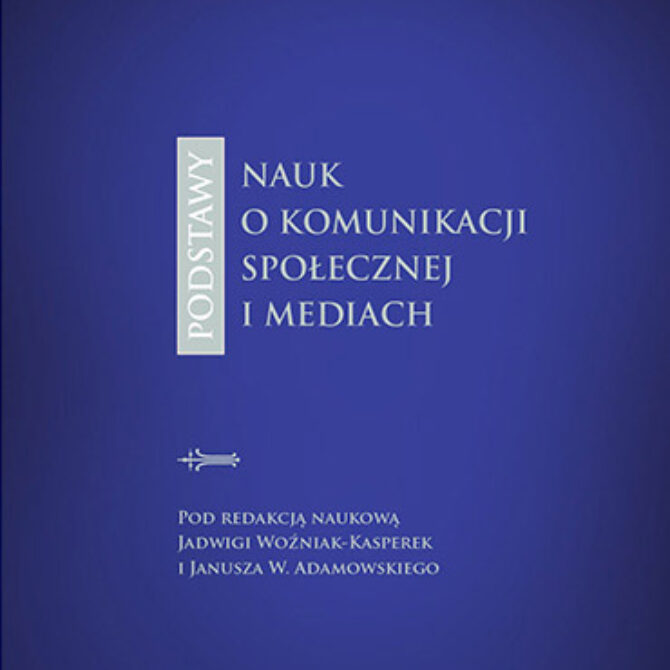
11th Meeting of the Committee and the Presentation of the Book Foundations of the Sciences of Social Communication and Media

-
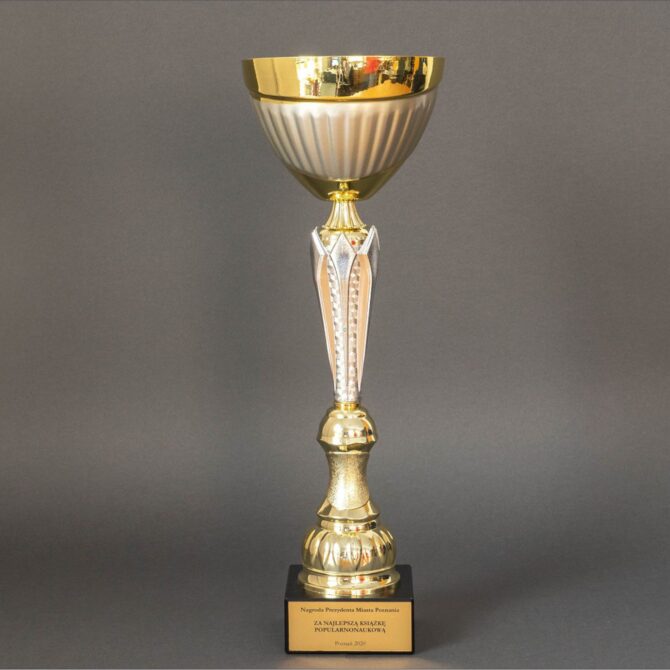
Announcement of the Results of the Awards of the Committee
-
The lecture series “Science – Media – Communication” was inaugurated on February 26, 2026.
-
Contact Form
-
Address
HEADQUARTERS
Committee on Social Communication and Media Sciences
Polish Academy of Sciences
Division I of Social Sciences, Room 2119
Plac Defilad 1, Pałac Kultury i Nauki
00-901 Warszawa, Poland——
CONTACT DETAILS
Chair of the Committee
Prof. Iwona Hofman
iwona.hofman@mail.umcs.pl
Głęboka 45, 20-612 Lublin, PolandSecretary of the Committee
Prof. Anita Has-Tokarz
anita.has-tokarz@mail.umcs.pl Głęboka 45, 20-612 Lublin, PolandWebsite Editor of the Committee
Prof. Damian Guzek
damian.guzek@us.edu.pl